When we were 16, our secondary school gave us a semester off to explore classes and activities outside the standard curriculum, a program they called the Gap Semester. Each of us recapped our experience at the end of the semester. When I look back on it, I see a reframing of the Gap that has been central for most of my life.
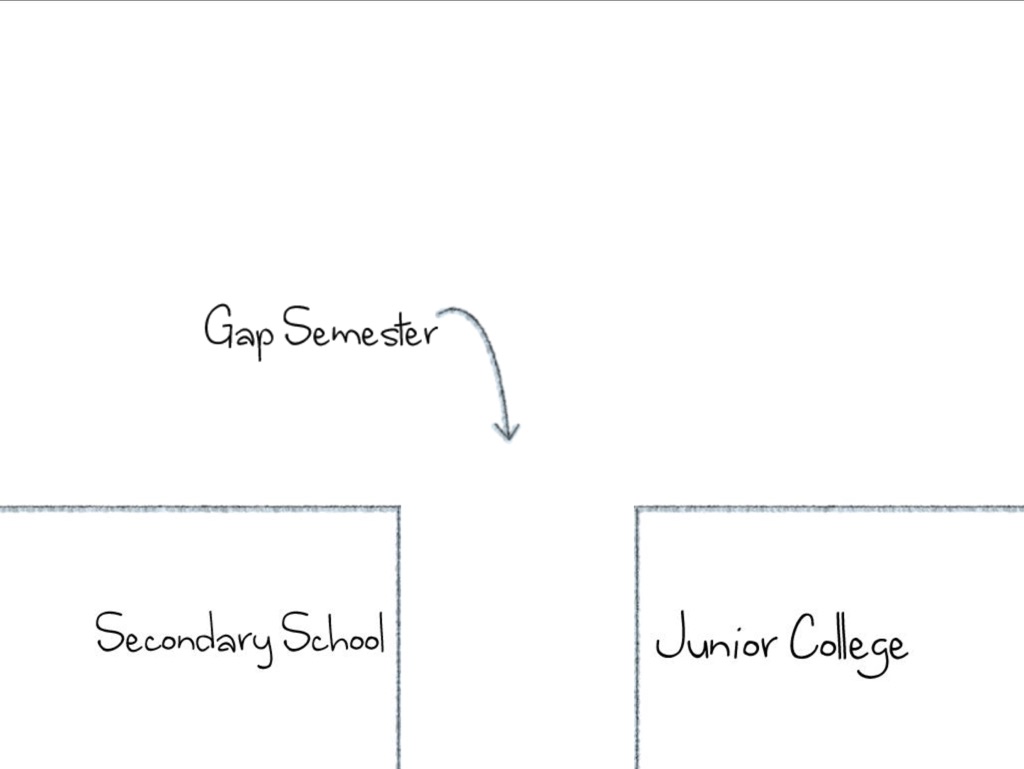
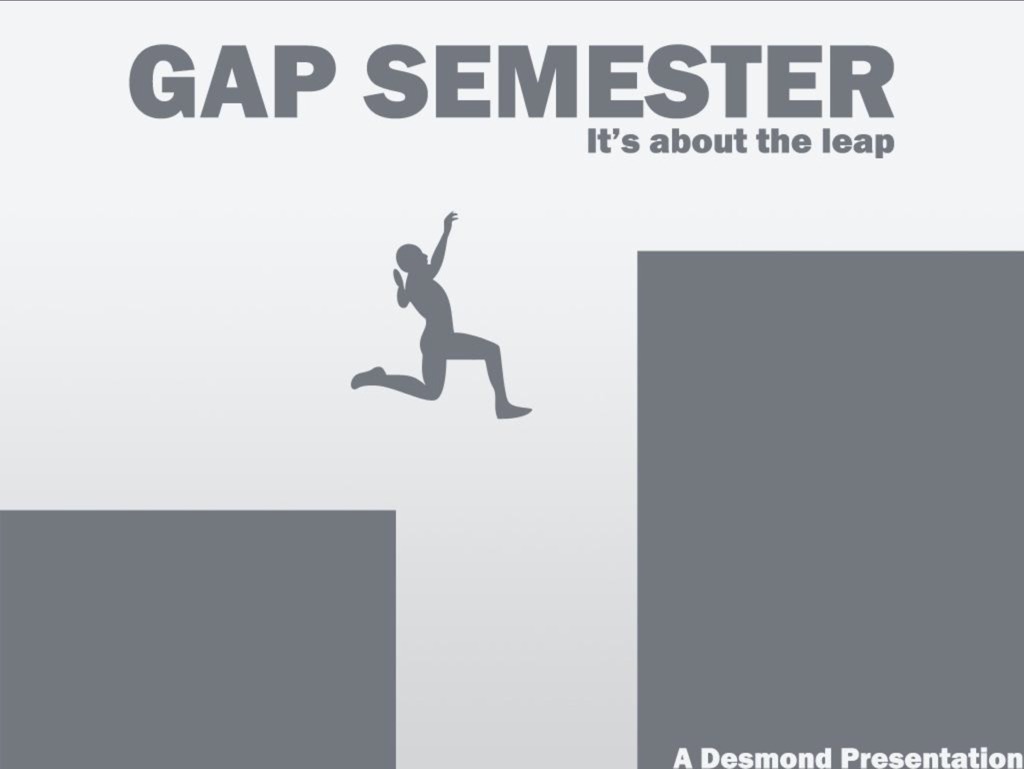
I thought of the Gap not as a break in between secondary school and junior college—a flat transition—but a leap (and a little bit of a leap of faith) towards some higher goal.
The Gap is mystic. It is the liminal space between a lower and higher state of being. "How does one reach the higher level?" We can dispel the mysticism by looking too closely at it, explaining it away as adaptations, synapses, inhibitory synapses, myelination; but at its heart, it is mystical to do something, fail a lot, and somehow fail better.
My fascination probably started with this quote by Ira Glass1:
Nobody tells this to people who are beginners, I wish someone told me. All of us who do creative work, we get into it because we have good taste. But there is this gap. For the first couple years you make stuff, it's just not that good. It's trying to be good, it has potential, but it's not. But your taste, the thing that got you into the game, is still killer. And your taste is why your work disappoints you. A lot of people never get past this phase, they quit. Most people I know who do interesting, creative work went through years of this. We know our work doesn't have this special thing that we want it to have. We all go through this. And if you are just starting out or you are still in this phase, you gotta know its normal and the most important thing you can do is do a lot of work. Put yourself on a deadline so that every week you will finish one story. It is only by going through a volume of work that you will close that gap, and your work will be as good as your ambitions. And I took longer to figure out how to do this than anyone I've ever met. It's gonna take awhile. It's normal to take awhile. You've just gotta fight your way through.
— Ira Glass
The Gap is taste. The Dunning-Kruger effect is often discussed in the context of low-skill or low-knowledge people overestimating their abilities. We should also talk about low taste. Without taste, you're unable to perceive the Gap. Taste is partly innate to ourselves and our intuition, but also comes from without. High craftsmanship, nature, and other people with high taste are naturally compelling enough to lift one's taste. Of course, taste compounds, so the Gap ever widens.
The Gap is deeply emotional. More than joy, the Gap and closing the Gap moves something deep inside me. I recently came across a quote by the Russian skater Adeliia Petrosian commenting on Alysa Liu's approach to training and competition: "I don't really understand the universal admiration for taking things so lightly, just having fun and enjoying it. For me, the focus is more on the mastery of the skater. When Alexei Yagudin skated 'Winter'; when Yuzuru Hanyu, Yuna Kim, Aliona Savchenko, or others I admire skated, I didn't care whether they were enjoying themselves on the ice, whether they showed it, or talked about it. I was interested in watching their skating and their programs because their performances were so beautiful and skillful they brought a lump to my throat." The world today emphasizes play, and while play is part of expert performance, it's the pain of the Gap that I empathize with. It's the pain of my own shortcomings that have produced the greatest leaps in my abilities and thinking. It's the lump in my throat when I see a beautiful artwork, a beautiful piece of writing, that makes me move.
The Gap is aesthetic. The Creation of Adam is such a compelling fresco because of the gap between Adam and God. If their fingers touched, the divine reaction would have already happened, and interest would have to be generated elsewhere. Just as important as the gap is the potential to close it: God's forefinger is fully extended, while Adam's is limp. This painting is immortal because of the Gap.
But as we've discussed: there is always a Gap; there is always a higher state; and perhaps the Creation of Adam reminds us that the Gap to our higher divine self can never be fully closed, and we must constantly lift our inert fingers towards God.
Footnotes
- Thanks to Zen Pencils doing a comic on it in 2012.↵